
Agreeing the boundary
How the Pride in Place boundary was agreed
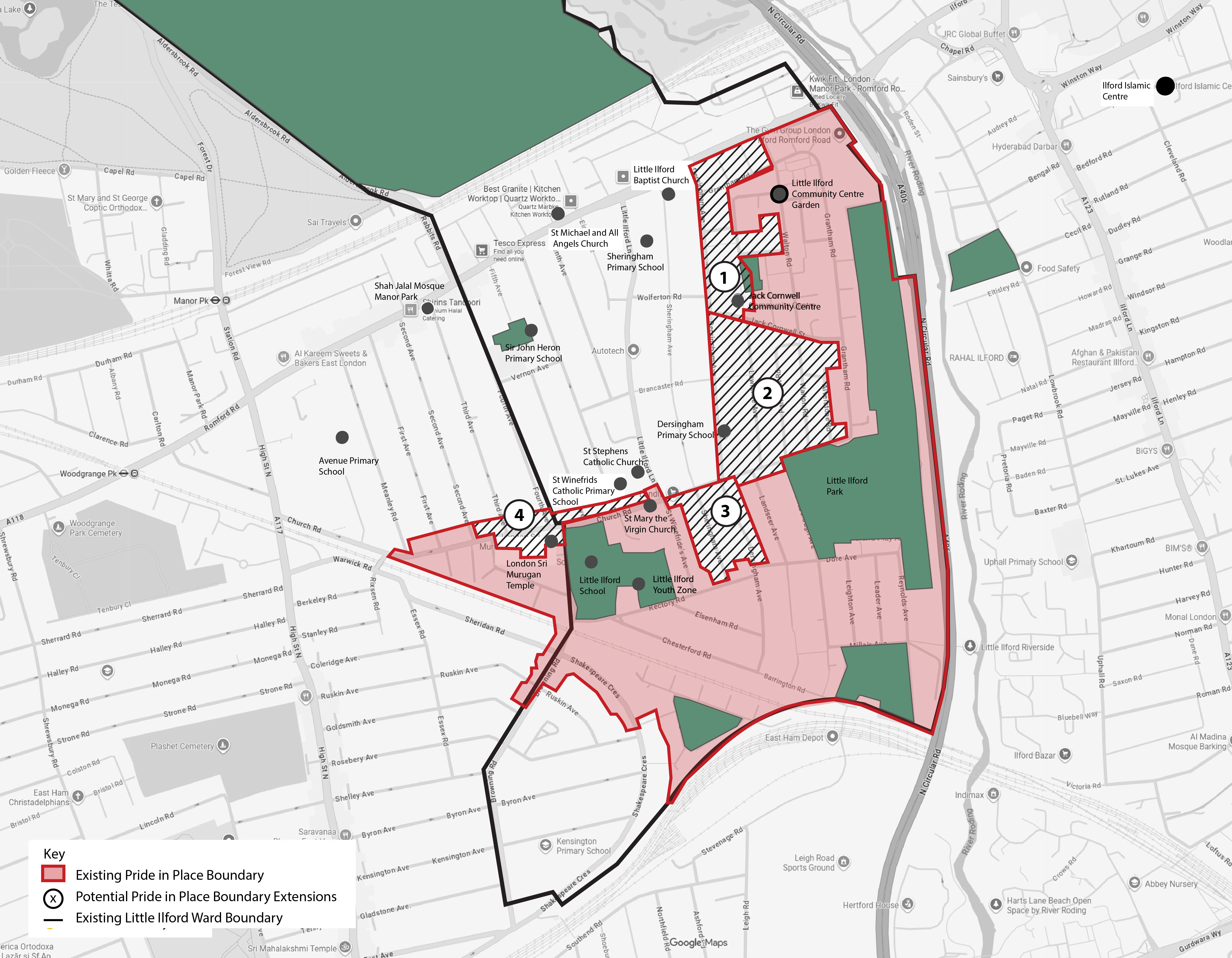
The Pride in Place boundary was developed through a combination of local evidence, community consultation and discussions with local representatives. The aim was to create a programme area that reflects the communities, facilities and neighbourhoods residents identify as part of Little Ilford, while bringing the area closer to the Government's indicative population of around 10,000 people.
The Government's default Little Ilford boundary covers approximately 7,000 people. Following the review, it was proposed that the programme area should be extended to include Areas 1, 2 and 3, while Area 4 would remain outside the boundary.
Listening to local views
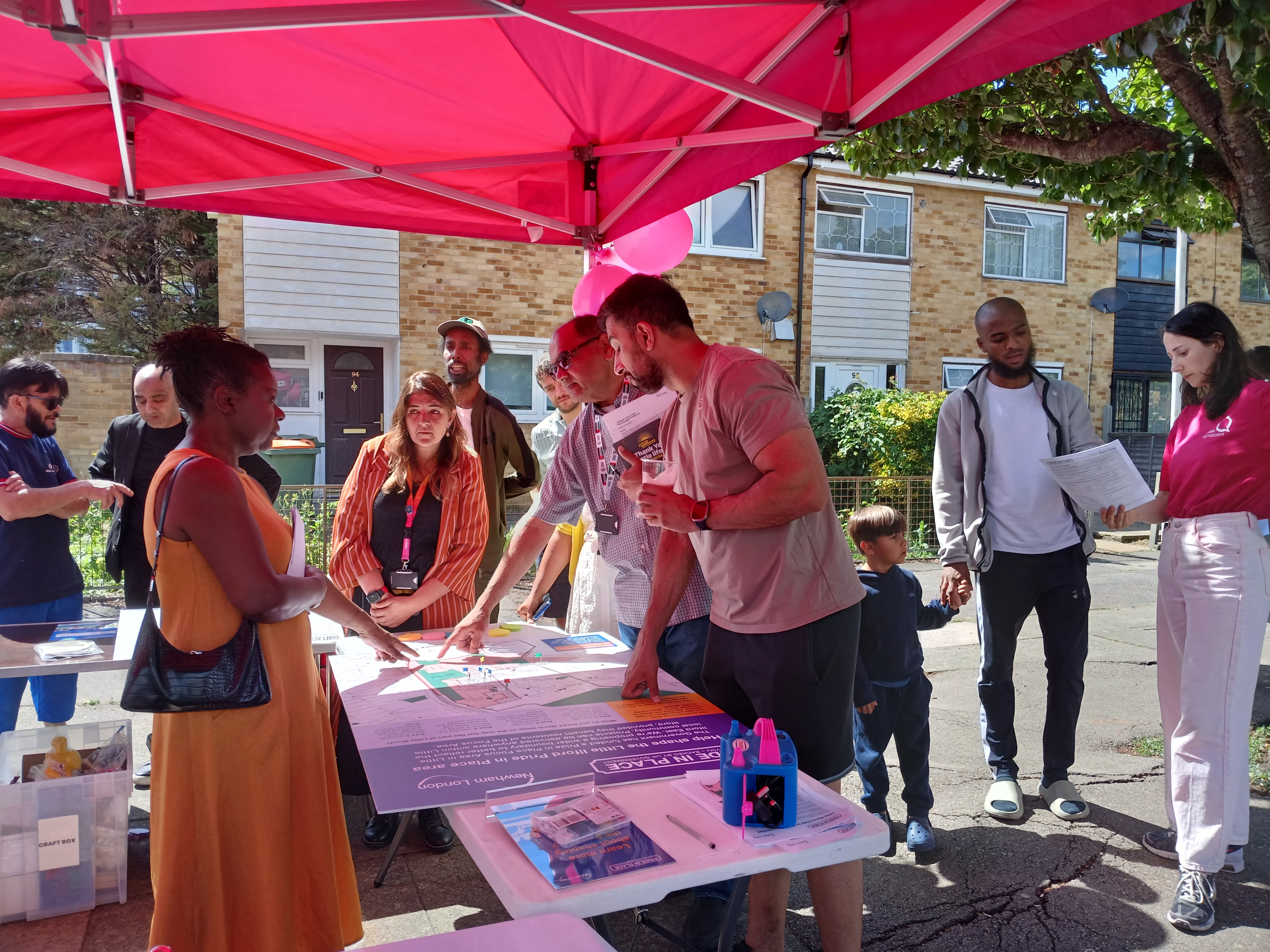
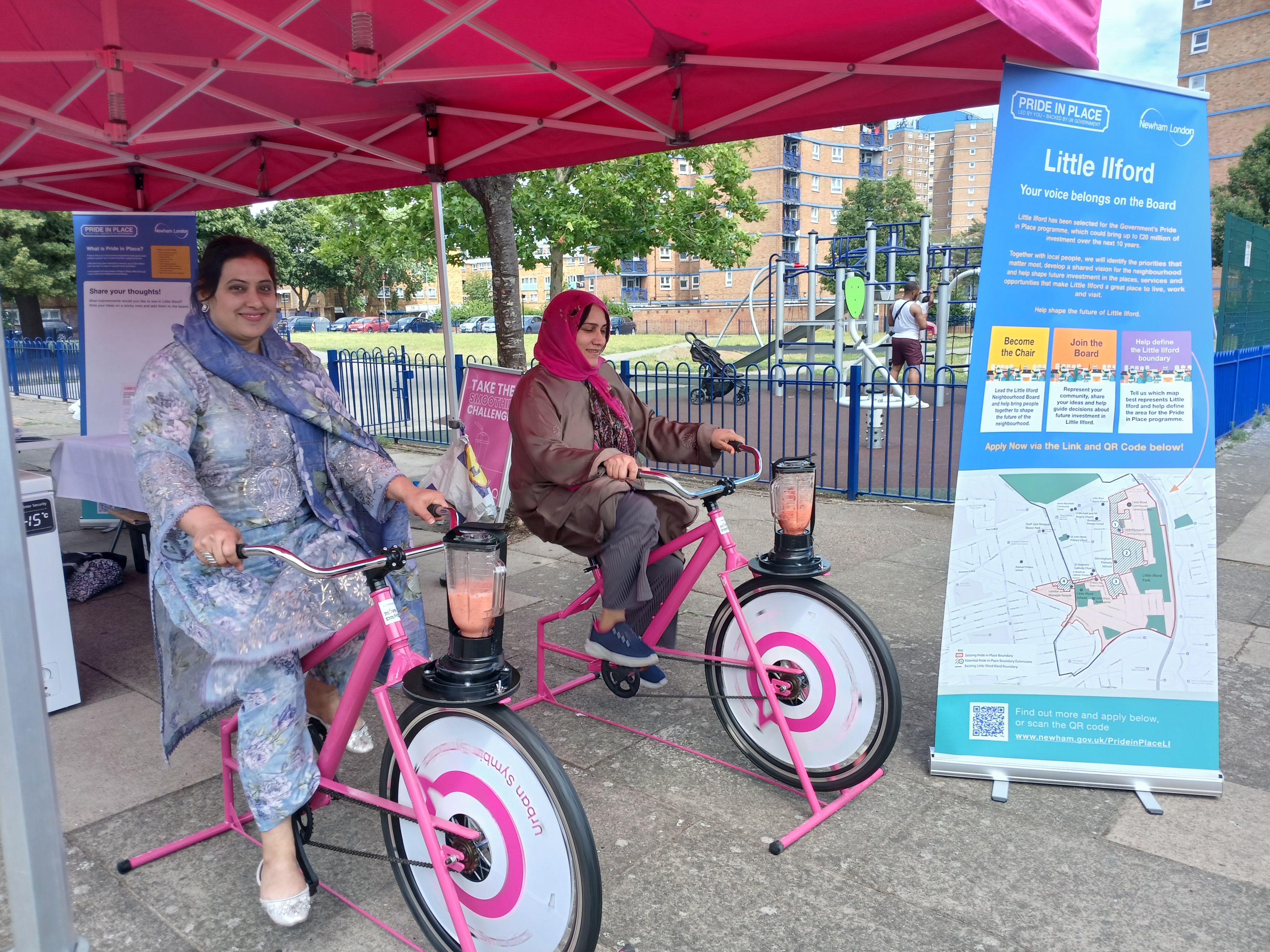
Residents were invited to share their views through two public pop-up events, held near Jack Cornwell Community Centre in the north and Hathaway Crescent Park in the south. Views were also gathered through community workshops and an online consultation, generating 71 responses specifically about the proposed boundary changes.
There was strongest support for including Areas 1, 2 and 3. These areas bring important community facilities, schools, estates, local shops and residential neighbourhoods into the programme area, while also including places where residents identified needs around safety, youth provision, community facilities, maintenance, green space and regeneration.
Area 4 was not included. While there was some support for its inclusion, views were more mixed and concerns were raised about its connection to Little Ilford and whether Pride in Place investment could have greater impact elsewhere.
The proposed boundary was subsequently discussed with local councillors and the local MP, who supported the proposed changes.
The revised boundary will provide a stronger framework for Pride in Place, connecting communities and key local facilities while helping to direct investment towards areas where residents have identified opportunities and need.